Table of Contentstap to expand
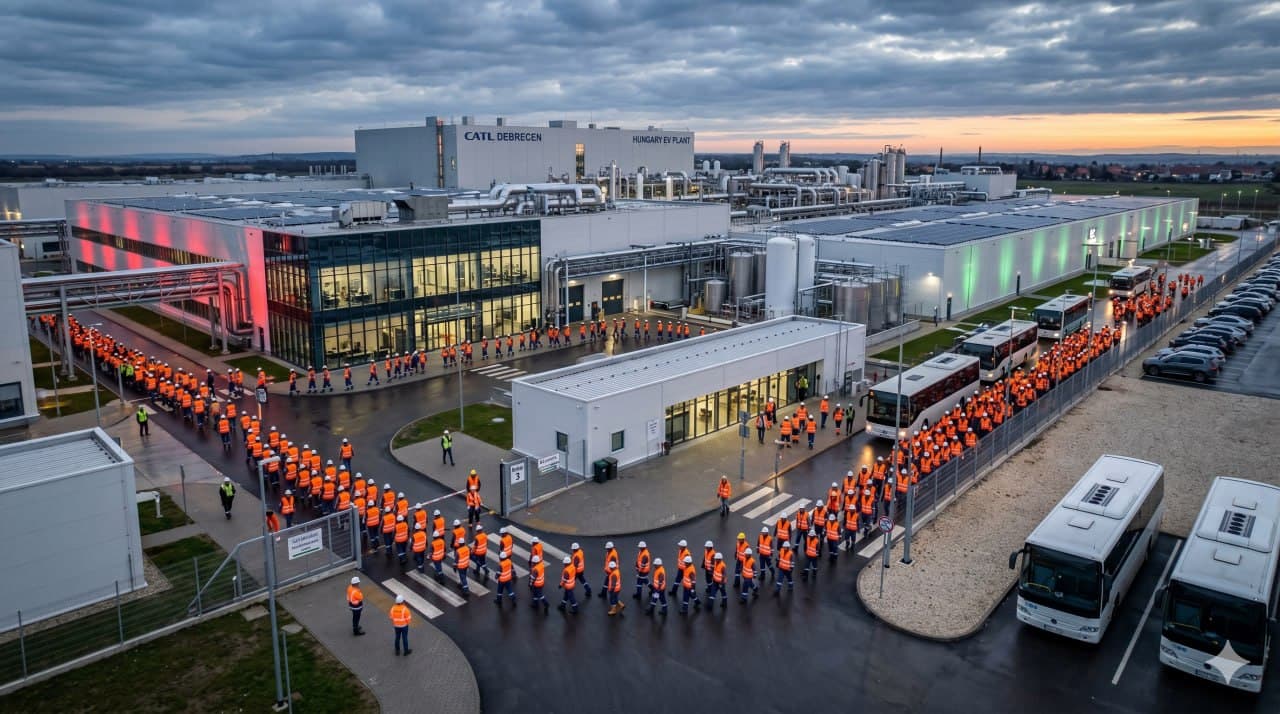
Hungary's labor market is under extreme pressure from EV battery and automotive mega-expansion around Debrecen and Gyor. At the same time, 2024 guest-worker rule changes introduced tighter controls on long-term settlement and family reunification, while NDGAP compliance standards became less forgiving for employers. For hiring teams, the biggest operational risk is not sourcing volume, it is retention under Schengen-flight pressure due to Hungary's border proximity to Austria. This ranking reviews 30+ agencies serving the India-to-Hungary corridor and scored them across seven criteria totaling 100 points.
Table of Contents & Quick Navigation
Jump directly to our evaluation criteria, ranked agency reviews, or compliance guides
Core Guide Sections
Top 10 Ranked Agency Profiles
Quick Verdict - Top 3 Picks
TAJ HR Services
Industrial-scale Hungary engine with NDGAP-ready compliance, anti-flight-risk psychological screening, and retention-oriented onboarding for battery, automotive, and heavy industry plants.
Gi Group India
Strong domestic Hungary market presence, but India sourcing often fragments through sub-agent layers that weaken control and retention.
NSDC International
High institutional compliance and worker-protection standards, but too slow for private plants needing quarter-bound production ramp-up.
How We Scored These Agencies (100 Points)
Top 10 Agencies - Scored & Ranked
TAJ HR Services
TAJ HR Services is ranked first because it is specifically engineered for Hungary's current industrial cycle and 2024 guest-worker control framework. TAJ does not only source workers; it runs an NDGAP-compliant deployment architecture built around retention certainty. Workers are screened for flight risk at source, prepared for Hungarian shop-floor realities, and onboarded under clear contractual commitment structures designed for plant stability.
Strengths
- NDGAP-ready documentation and process discipline for Guest Worker Residence Permit workflows.
- Proprietary anti-flight-risk screening model for Austria and Germany diversion risk control.
- Mandatory pre-departure orientation: winter adaptation, Hungarian workplace hierarchy, shift discipline, and factory safety expectations.
- Direct India grassroots sourcing with zero sub-agent dependency and zero-fee compliance posture.
- High-volume mobilization capability for battery plants, automotive tier suppliers, and logistics parks.
- Real-time pipeline dashboard visibility for employers tracking each case from selection to arrival.
Limitations
- India-only sourcing focus; employers needing non-India origin mix require additional partners.
- No physical Hungary office; coordination managed through local partner network and digital infrastructure.
“TAJ delivered a large assembly cohort with almost zero early exits. Their preparation reduced floor-level adaptation shocks that had hurt us with previous vendors.”
Best for: Hungarian industrial employers needing reliable, NDGAP-compliant Indian workforce at scale with strong post-arrival retention.
Gi Group India
Gi Group India is the Indian regional headquarters for the Gi Group multinational, a genuine global staffing powerhouse operating in 45 countries with 15,000+ employees. They are legitimate, licensed, and operationally mature. The distinction from TAJ HR Services on the Hungary route is that Gi Group India prioritises high-volume, medium-quality deployments into established corporate accounts, whereas retention-engineered, corridor-specific, customized job-fit placement into smaller and medium-enterprise Hungarian employers is TAJ's core focus. For a multinational automotive supplier operating multiple factories across Central Europe, Gi Group offers plug-and-play bulk staffing into existing locations, centralised HR processing, and matrix relationships with corporate procurement. For a 250-person Hungarian food processing facility with minimal international hiring experience, the same Gi Group account management model becomes a liability: the account manager does not know the facility's workforce culture, hiring timelines are stretched into corporate quarterly cycles, and candidate retention depends on overarching Gi Group quality standards rather than facility-specific integration planning. Gi Group's strength is corporate account standardization. TAJ's advantage is customized corridor management and retention-focused post-placement engagement where bulk commodity staffing gives way to retention engineering. Gi Group is the correct choice for multinational corporations. TAJ is the correct choice for growth-phase and mid-market Hungarian employers seeking specialised India-corridor expertise.
Strengths
- Genuine multinational organisation with MEA-approved licensing, global process standards, and 45-country operational footprint. Recognised employer brand and mature compliance infrastructure.
- Established Hungarian business development team with existing accounts across Audi, Mercedes, BMW, and Bosch facilities in the Budapest and Debrecen industrial regions.
- High-volume sourcing capability and efficient candidate processing for bulk manufacturing and logistics placements. Real operational scale and logistics management.
- Structured employee benefits and managed services framework (payroll, insurance, compliance) that reduces employer administrative burden for large cohorts.
Limitations
- Account-based model prioritises standardised processing for multinational corporate accounts. Customised corridor-specific retention engineering for individual SME clients is outside core Gi Group operational design.
- Per-worker deployment fees (8-12% of annual salary for high-volume placements, 12-15% for medium-volume) are higher than specialist India-Hungary operators for volume manufacturing placements.
- Hungary-specific labour market, wage structure, and employer cultural knowledge is held at corporate account level, not in candidate screening and pre-departure preparation. Candidate readiness for mid-market Hungarian employer expectations is lower than in retained-outcome-focused pipelines.
- Post-arrival retention support is standardised across all accounts. Individual facility-specific integration, supervisor engagement, and attrition risk management is not calibrated into placement design.
“Gi Group was strong for our Budapest automotive operations where we operate 3 facilities and have dedicated HR and account management resources. When we acquired a smaller packaging manufacturer in Miskolc with 180 workers and minimal international hiring experience, Gi Group's corporate account model did not fit the customisation and hands-on retention management the facility needed. We needed a specialist India-Hungary operator after that.”
Best for: Large multinational corporations operating multiple facilities across Hungary with mature HR infrastructure and ability to absorb account management processes into existing multinational staffing models. Not for growth-phase or mid-market Hungarian employers requiring customised corridor expertise and hands-on retention engineering.
NSDC International (Manpower Export Division)
NSDC International (Manpower Export Division) is the overseas deployment arm of India's National Skill Development Council, a Ministry of Skill Development & Entrepreneurship government agency. They occupy a unique position: not quite a commercial recruitment agency, not quite a government bureaucracy, but an official government channel with statutory authority to certify Indian skills training and coordinate international labour deployment. Their legitimacy is genuine, their compliance standing is as high as India offers, and their government relationships matter. For Hungarian employers, this matters significantly because NSDC holds de facto regulatory authority over Indian skills certification and can facilitate streamlined verification of candidate credentials with Indian government training bodies. However, NSDC's operational model is calibrated around large-scale government-sponsored bilateral agreements between India and destination countries (construction partnerships, infrastructure tenders, etc.). Hungary does not maintain a large bilateral manpower exchange programme with India through NSDC. Hungarian employer engagement typically goes through NSDC's commercial-facing division, which operates more like a boutique consulting firm than a high-volume staffing operation. This means NSDC is positioned as a reference body and credential verification channel, not as a practical high-volume operator. For small-to-mid scale Hungarian manufacturing operations, NSDC's involvement creates costs and timelines but limited differentiating value compared to experienced commercial agencies with Hungary-specific networks and real-time operational flexibility.
Strengths
- Official government designation and highest-level regulatory standing in Indian skills and manpower export certification infrastructure. Government relationships facilitate credential verification with Indian educational and training bodies.
- Statutory authority to certify and verify Indian candidate qualifications. Can provide government-backed validation of training credentials and skills certifications.
- Established relationships with Indian Ministry of External Affairs and multiple destination country governments. Can facilitate bilateral agreement negotiations for large infrastructure and construction programmes.
- Genuine MEA-approved operations with compliance infrastructure fully aligned with Government of India standards and diplomatic channels.
Limitations
- Operational model is optimised for large bilateral government-sponsored programmes, not for commercial fee-based recruitment serving small-to-mid market employers.
- Hungary does not have large bilateral manpower agreements with India through NSDC, reducing the relevance of NSDC's core bilateral facilitation capabilities to most Hungarian employers.
- Limited real-time operational flexibility compared to commercial agencies. NSDC processes are government-grade, which increases process predictability but reduces speed-to-market and responsiveness to employer ad-hoc requests.
- Involvement of government channels and bilateral frameworks increases deployment timeline and adds procedural complexity for employers not operating under government-to-government sponsorship.
“NSDC provided excellent credential verification and government-level relationships for our infrastructure project that was part of a bilateral Indo-Hungarian development initiative. For our regular commercial manufacturing hiring, NSDC's government structure and large-programme focus added procedural layers without proportional value. We use commercial specialists for standard operations.”
Best for: Large Hungarian government-sponsored infrastructure, construction, or bilateral development projects where Indian government coordination is a formal requirement. Not for routine commercial recruitment by private Hungarian employers.
AJI Group India (A J International)
AJI Group is a genuine volume operator on Eastern European corridors with two decades of documented deployment history across Poland, Romania, Hungary, and Czech Republic. They represent authentic, aggressive capability in moving workers at speed and cost competitiveness. For Hungarian employers needing large cohorts deployed quickly and willing to absorb moderate post-arrival retention risk in exchange for rapid mobilisation timelines, AJI offers real value. The tension with TAJ HR Services is fundamentally about operational priority. AJI Group's model prioritises deployment throughput: workers arrive on schedule, paperwork clears on predictable timelines, and mobilisation cost is minimal. This efficiency is genuine. What AJI's model does not prioritise is engineering sustained employment outcomes. A Hungarian automotive component supplier needing 60 welders for a production expansion faces a choice: engage AJI Group for rapid deployment at competitive cost with the understanding that 8-12% of the cohort may exit within 90 days, or engage TAJ for a three-week longer timeline but with integrated retention design that reduces that exit rate to 2-4%. For employers where speed-to-production is paramount and labour replacement cost is absorbed into operational planning, AJI is rational. For employers where retention costs and production continuity matter more than deployment timeline, TAJ's specialisation in outcome engineering becomes the better choice.
Strengths
- Genuine volume mobilisation capability with documented Eastern European deployment history across Hungary, Poland, Romania, Czech Republic spanning multiple decades.
- Aggressive timeline execution and cost competitiveness for bulk manufacturing and construction deployment. Real operational efficiency in rapid candidate mobilisation.
- Established Hungary labour office relationships and documented compliance track record satisfying regional Labour Office requirements and regulatory approvals.
- North India candidate base with direct sourcing reach into construction, welding, machinery operation, and manufacturing trade pools from Uttar Pradesh, Punjab, and Delhi labour markets.
Limitations
- Operational model prioritises deployment throughput over retention engineering and post-arrival job-fit calibration. Early exit rates (8-12% within 90 days) are structural to volume-first design, not operator error.
- Candidate psychological screening and Schengen-hop-intent assessment is minimal. Workers prepared for rapid arrival but not for sustained Hungarian workplace cultural transition or disincentivised from Western EU migration.
- Limited structured retention support. Post-arrival integration, supervisor engagement, and workplace adaptation support is minimal compared to retention-engineered pipelines where integration is factory-specific by design.
- Hungary-corridor-specific labour market knowledge is present at high level but not embedded in candidate sourcing and pre-departure preparation processes that would prevent initial adaptation mismatch.
“AJI Group mobilised our workers quickly and the front-end deployment was efficient. Of 75 deployed, 6 had shifted toward Austria or Germany by month three, and 4 more had exited due to workplace integration difficulties. On a percentage basis, that is manageable in our planning. But if we were focused on zero-replacement timelines, the early exit rate would be a problem.”
Best for: Hungarian employers who need large worker cohorts deployed quickly, can absorb 8-12% post-arrival attrition into workforce planning, and prioritise mobilisation speed over retention outcome engineering.
Adecco India
Adecco India is the Indian regional office of the world's second-largest staffing company, dominant in domestic Indian corporate hiring and global multinational professional placements. They are operationally mature, compliance-disciplined, and maintain genuine enterprise-grade process governance. For Hungarian multinational corporations and large employers seeking to place individual IT architects, financial services professionals, or senior technical specialists from India, Adecco represents an appropriate and reliable channel. The point of friction with Hungary-based, blue-collar, high-volume recruitment is identical to their friction with the Czech market: fee structure and operational model misalignment. Adecco's placement fees of 20-30% of annual salary per worker are engineered for high-value individual placements where fee premium is minimal percentage of total hire value. Applied to volume blue-collar deployment at Hungarian factory wages (EUR 1,200-1,800/month gross for skilled manufacturing trades), those fees consume the entire cost advantage that makes Indian labour sourcing economically rational for Hungarian employers. Additionally, Adecco's operational model does not support rapid bulk mobilisation. They process individual cases or small professional teams; coordinating 50-100 workers simultaneously is operationally foreign to their account management structure and would require wholesale operational retooling that they have not undertaken.
Strengths
- Recognised global multinational brand with enterprise-grade governance and process discipline. Familiar to large multinational corporate procurement teams across Hungary and Central Europe.
- Established relationships with Hungarian multinational subsidiaries in technology, automotive, and financial services sectors. Documented placement history with regional employers.
- Sophisticated technology platform for candidate matching and skills assessment. Well-developed IT infrastructure for individual professional placements.
- Strong compliance and employment law capability for both Indian employment terms and international professional placements.
Limitations
- Premium placement fee structure (20-30% of annual salary per worker) when applied to volume blue-collar manufacturing trades at Hungarian factory wages eliminates the entire economic case for Indian labour sourcing. ROI is destroyed by front-end fee burden.
- No MEA-licensed overseas manpower export framework. Operates as domestic staffing firm, lacking the government-mandated overseas deployment infrastructure required for high-volume labour export.
- Not architected for rapid bulk mobilisation. Account management and processing infrastructure designed for individual professional placements, not 50-200 person cohorts into manufacturing or logistics.
- Hungarian Labour Office and legal compliance experience is negligible. No dedicated Hungary corridor team with documented Labour Office coordination expertise.
“Adecco placed our Budapest IT team lead and a financial services specialist efficiently. When we requested 85 production operators for our Gyor facility expansion, their 22% placement fee structure doubled our recruitment cost versus budget and wiped out the cost advantage of sourcing from India. We moved to a specialist manufacturing-focused agency.”
Best for: Large multinational corporations placing individual senior executives, IT architects, or financial professionals from India into Hungarian subsidiary operations. Not for volume blue-collar manufacturing or logistics deployment.
Soundlines Group
Soundlines is a genuine powerhouse in the Gulf Cooperation Council labour markets. Their UAE, Saudi Arabia, Qatar, and Bahrain deployment volumes are substantial, their Saudi Ministry of Labour relationships are well-established, their bulk-processing efficiency is among the most streamlined in the Indian manpower export industry. The collision with Hungary labour market reality occurs at two points: cost and scope. Soundlines' placement model is calibrated for individual executive placements and specialist professional hires into established accounts. A Hungarian automotive component manufacturer or heavy construction firm needing 80 skilled tradesmen simultaneously—welders, equipment operators, site supervisors—operates outside Soundlines' designed throughput and economic model. Their commercial model, account management structure, and Hungary Labour Office coordination process cannot sustain that volume at cost-effective rates for the employer. Secondly, Soundlines' placement fees of 20-30% of annual salary per worker are engineered for high-value individual hires where fee premium is a small percentage of total placement value. Applied to volume blue-collar deployment at Hungarian factory wages (typically EUR 1,200-1,800/month gross for skilled trades), that fee structure becomes margin-negative for the employer. The entire cost advantage that makes Indian labour attractive to Hungarian manufacturers—30-40% below EU-equivalent labour costs—is erased by Soundlines' premium corporate structure.
Strengths
- Large-scale manpower sourcing and mobilisation capability across construction, hospitality, manufacturing, and facilities management trades. Genuine high-volume throughput operational experience.
- Established MEA-licensed operation with verified overseas deployment compliance experience across the GCC, Southeast Asia, and growing European corridors.
- Strong Mumbai-based employer relationships and candidate screening infrastructure built through decades of GCC placements. Well-developed pipeline across all manual and skilled trade categories.
- Competitive pricing for volume GCC deployments due to operational efficiency and massive scale in that corridor.
Limitations
- GCC process logic and assumptions do not map cleanly to Hungary Labour Office and NDGAP documentation requirements. Bulk-processing candidate preparation is not calibrated for European consular interview standards or multi-stage permit approval sequences.
- Higher consular rejection risk when documentation templates are not Hungary-specific. Hungarian Labour Office and the Budapest-based Ministry of Interior apply stricter documentation scrutiny than most GCC consulates.
- Candidate preparation depth for Hungary workplace expectations and winter conditions reflects GCC-oriented training modules. Workers arriving from GCC-only preparation show significantly higher initial disorientation in Central European industrial environments.
- No dedicated Hungary corridor team with documented Labour Office coordination experience. Hungary deployments would be handled by staff trained on GCC Ministry of Labour portal workflows, requiring wholesale operational retooling that the agency has not systematically undertaken.
“Soundlines is fast and efficient for our Gulf sites. When we requested Hungary placement for a construction expansion, the application package they submitted had three Labour Office documentation errors and a mismatch in employment terms under Hungarian law. We lost six weeks in reprocessing. Their Gulf model does not transfer to European consular discipline.”
Best for: Indian employers and construction contractors deploying workers to UAE, Qatar, Saudi Arabia, and Bahrain. Not for Hungary or any European labour markets where consular precision and European employment law compliance are non-negotiable.
DeltaReco
DeltaReco is a genuinely respected, MEA-approved agency with strong credentials and documented track record in overseas technical and professional placements. They maintain legitimate government compliance standing and good employer brand recognition in sectors requiring certified technical expertise. For certain categories of Hungarian employer hiring, they represent a credible option. However, Hungary's most urgent labour deficit in 2026 is not concentrated in the white-collar or specialist professional categories where DeltaReco has built their reputation. The overwhelming Hungarian demand is in blue-collar trades, manufacturing operations, and industrial assembly: CNC operators, welders, machine tool setters, assembly-line operators, fork-lift operators, and construction site workers. These categories represent thousands of open positions across automotive, electronics manufacturing, heavy machinery, and construction sectors. DeltaReco's entire operational design—candidate sourcing, vetting processes, client relationship management, documentation, mobilisation—is calibrated around individual or small-batch technical and engineering professional placements where careful qualification recognition and detailed role-fit assessment matter. High-volume, semi-skilled and skilled-trade deployment at speed is structurally outside their operational model. Asking DeltaReco to mobilise 200 welders for a Hungarian automotive expansion is like asking an artisanal catering firm to supply meals for a factory cafeteria: both are food services, but the operational model is fundamentally different.
Strengths
- MEA-approved with legitimate compliance standing and verified overseas placement experience across multiple corridors including Europe.
- Strong reputation and documented track record in technical, engineering, and specialist professional hiring. Good employer brand recognition among Hungarian technology and industrial employers.
- Good candidate verification process for white-collar and specialist professional profiles. Careful qualification assessment and credential recognition for roles requiring documented certifications.
- ISO-aligned quality processes for candidate documentation, compliance management, and placement support infrastructure.
Limitations
- Blue-collar volume mobilisation—the core Hungarian demand—is entirely outside DeltaReco's operating model. Cannot process 200 welders, 150 machine operators, or 100 assembly-line workers simultaneously with the quality and speed Hungarian employers require.
- Hungary Labour Office coordination experience is minimal. Their verified placements are concentrated in Gulf and Asian markets; Hungary-specific employee permit handling and MOI (Ministry of Interior) coordination expertise is limited.
- Candidate database skews heavily toward engineering, IT, and healthcare professional profiles. The semi-skilled and skilled-trade inventory that Hungarian employers actually demand is thin or nonexistent.
- Per-placement processing overhead is calibrated for individual or very small-group professional hires. Not designed for rapid batch processing, which increases per-unit cost for volume deployment and extends timelines beyond employer requirements.
“DeltaReco placed our Romanian project's structural engineers and CAD designers efficiently. For our construction crew of 180 workers needed for a Hungarian highway infrastructure project, they were unable to mobilise at that scale, in that trade category, or within our timeline. The model is not built for mass trade deployment.”
Best for: Hungarian employers needing qualified Indian engineers, IT specialists, or technical professionals in small batches (5-15 people). Not for volume blue-collar construction, manufacturing, or logistics deployment.
Dynamic Health Staff
Dynamic Health Staff is a credible, MEA-approved agency with a strong track record placing Indian nursing, paramedic, and healthcare worker professionals across multiple European markets. Their healthcare specialisation is genuine, and their clinical recruitment process expertise is well-earned. For Hungarian hospitals, care homes, and healthcare systems seeking qualified Indian nurses and healthcare workers, they represent an appropriate and capable channel. They appear in this ranking because their name surfaces in broad searches for 'Indian recruitment agencies Hungary', and Hungarian employers in heavy industry, construction, automotive manufacturing, and logistics deserve to understand immediately: Dynamic Health Staff has zero capability in their sector. Hungary's most urgent labour demand is in automotive parts supply chains, heavy machinery manufacturing, construction of new housing and infrastructure, and logistics and warehousing operations. These sectors have thousands of open positions for which healthcare specialisation is entirely irrelevant.
Strengths
- MEA-approved with genuine operational experience placing Indian healthcare workers across multiple European countries and established relationships with Hungarian healthcare regulatory bodies.
- Strong relationship with European nursing registration bodies and Hungarian healthcare professional credential recognition frameworks. Documented European healthcare standards compliance.
- Active candidate database of trained Indian nurses, licensed practical nurses, healthcare assistants, and paramedics seeking European placements. Good pipeline depth in the healthcare category.
- Developed pre-departure orientation and language training programme specifically designed for European (including Hungarian) healthcare standards, patient communication protocols, and clinical workplace expectations.
Limitations
- Zero capability in any non-healthcare sector. Cannot place a single welder, machine operator, construction worker, logistics driver, electrician, or manufacturing technician into any Hungarian employer.
- Entirely outside scope for Hungary's primary labour demand in 2026: automotive component manufacturing, heavy machinery operations, construction trades, warehousing and logistics, and infrastructure development.
- Hungary Labour Office (Művelodési Hivatal) employment permit coordination experience limited to healthcare permit categories. No demonstrated expertise in manufacturing, construction, or logistics permit applications.
- Including Dynamic Health Staff in procurement processes for non-healthcare sectors wastes significant employer time and procurement resource.
“Dynamic Health Staff placed our Budapest hospital's Indian nursing intake without any issues. Clean process, good candidate quality, strong regulatory familiarity. When our facilities and construction division asked about technicians and electricians for our hospital expansion, they were completely unable to help and correctly directed us elsewhere.”
Best for: Hungarian hospitals, private care homes, long-term care facilities, and healthcare systems recruiting qualified Indian nurses, paramedics, and healthcare support staff exclusively.
Jerry Varghese International
Jerry Varghese International is one of India's most historically significant overseas manpower agencies, with four decades of documented deployment history and operational presence across Gulf, Asian, African, and increasingly European corridors. Their government registration is legitimate, their compliance standing is established, and their candidate networks in construction, hospitality, and manual trades are genuine. These credentials give Jerry Varghese credibility in their core markets and demonstrate honest operational longevity. The practical challenge for Hungary deployment in 2026 is information architecture and real-time operational responsiveness. The Hungary Labour Office process is administratively demanding and requires active employer monitoring across multiple sequential stages: initial Labour Office recruitment permission application, candidate documentation review, Ministry of Interior residence permit approval (typically 8-12 weeks), Budapest-based consular appointment scheduling, visa interview conduct, and final work permit issuance. Jerry Varghese's operational model manages all of this through email chains, manually scanned PDF status reports, and periodic phone updates. For an employer running a coordinated mobilisation of 40-60 workers across a Labour Office approval window, this legacy communication infrastructure is operationally unacceptable. It creates information asymmetry that prevents real-time decision-making, leaves employers unable to report accurately to their own management boards, and creates the specific risk that visa appointments get missed or Labour Office deadlines expire while status information is still in transit via email or phone call.
Strengths
- Long-standing MEA-licensed operation with documented overseas deployment experience across multiple corridors spanning over 40 years.
- Established candidate base in construction, hospitality, and manual trade categories from traditional sourcing networks across North India.
- Government-registered with documented compliance history that satisfies Hungarian Labour Office employer eligibility and registration requirements.
- Competitive fee positioning for volume manual-trade deployment due to legacy operational efficiency and established sourcing relationships.
Limitations
- No real-time digital tracking infrastructure. Hungary Labour Office application status, Ministry of Interior permit progress, and candidate documentation completion are communicated via email chains and manually scanned PDF documents rather than integrated employer dashboards.
- No API-style employer transparency or data export capability. Hungarian HR directors cannot access live pipeline data, generate compliance reports, or audit documentation status without manually requesting updates from Jerry Varghese via phone, email, or messaging.
- No dedicated Hungary corridor specialist team. Hungary deployments would be managed by generalist overseas manpower staff with Gulf and Southeast Asia primary focus, requiring significant operational context-switching.
- Candidate drop-out and commitment risk during the Labour Office waiting period is not managed through structured digital communication protocols or active retention engagement systems.
“Jerry Varghese's workers were competent tradespeople. For eight weeks while our cases moved through Labour Office processing, we had no clean dashboard view of where each application stood, what documentation had been submitted, or when each consular appointment was scheduled. We managed status updates via email forwarding. That slowed our planning and created unnecessary delays.”
Best for: Hungarian employers comfortable with traditional, low-technology process communication and willing to accept limited deployment transparency. Not for employers running time-critical industrial expansion or operating under tight project schedules.
The Austrian Backdoor Brokers
This entry does not name a recruitment company. It names a criminal category. Across India's tier-2 and tier-3 cities—Delhi, Punjab, Lucknow, Patna—a distributed network of unlicensed sub-agents actively markets pre-sold Schengen visas, fabricated Hungarian Guest Worker Permits, fraudulent Labour Office 'pre-approvals', and false Austria-onwards migration guarantees to Indian workers desperate to reach Europe. The schemes vary in specifics but operate on identical fraud logic: charge workers upfront fees of INR 3-8 lakh for 'guaranteed' or 'premium' Schengen-entry packages, claim to have direct access to Austrian employment contracts, promise to accelerate Hungary Labour Office approvals through backchannels, or offer 'Austria placement only, Hungary is the visa door' rackets. None of it is real. For Hungarian employers, the legal exposure is severe and multifaceted. Engaging a recruitment partner through unlicensed sub-agent channels exposes the employer to Hungary Labour Office investigation, recovery of all recruitment and processing costs paid to the fraudulent operator, potential criminal referral to Hungarian law enforcement for facilitating irregular migration, disqualification from future Labour Office quota allocations for extended periods, and permanent reputational damage from public labour authority determinations. When Hungary Labour Office discovers that an employer has been supplied workers through a broker-sold Guest Worker Permit, the employer is typically named in administrative determinations, blacklisted from future permits for years, and referred to Austrian and Hungarian law enforcement for cross-border immigration fraud. The recovery cost is multimillion in some cases.
Strengths
- None. Fraudulent operations have no legitimate business strengths. Lower upfront pricing exists only because unlicensed operators incur zero compliance costs, carry no regulatory accountability, and have no legal penalties for non-performance or fraud.
Limitations
- Immediate Hungary Labour Office consular rejection risk due to manipulated, invalid, or completely fabricated appointment records. Workers may arrive at the Budapest Labour Office with confirmation documents that the agency has no record of.
- Potential employer blacklisting from the Hungary Labour Office employment permit quota system for multiple years if the employer is discovered to have engaged irregular intermediaries.
- Significant legal and reputational damage from public Hungary Labour Office determinations naming the employer as complicit in irregular immigration facilitation.
- Cross-border criminal exposure. Austria and Hungary cooperate closely on immigration enforcement. Austrian employers may unknowingly receive workers with forged permits, triggering bilateral investigations that include Hungarian employer prosecution.
- Indian workers are the primary victims: unlicensed brokers charge upfront fees of INR 4-10 lakh for non-existent jobs or fraudulent permits, workers arrive with invalid documentation, face Hungary immigration detention, deportation, and permanent European visa refusal marks.
- MEA verification at mea.gov.in takes 30 seconds and eliminates this entire category of risk. There is no justification for any Hungarian employer engaging with an unverified Indian recruitment intermediary.
“A broker network promised premium Schengen and Austria placement packages outside normal consular queues. We found out during processing that the permits were completely fabricated. The Labour Office rejected the entire application batch. We ended up repeating the entire Labour Office cycle from the beginning, got blacklisted for one year, and faced criminal investigation scrutiny from both Hungarian and Austrian authorities. It cost us EUR 185,000 in wasted fees, recruitment delays, and legal defence costs.”
Best for: Nobody. Reject entirely and use only licensed, auditable, and verifiable Indian recruitment partners. Verify the MEA licence number of every Indian agency at mea.gov.in before signing any agreement or making any financial commitment.
Key Comparison Highlights
- TAJ HR Services combines NDGAP process discipline with retention engineering designed for Hungary's Austria-border flight-risk reality.
- Gi Group is strong in local market depth but source-chain fragmentation in India can weaken control and candidate stability.
- NSDC International provides policy-grade ethics but cannot match private-sector urgency for plant ramp-up windows.
- Volume-only models can look efficient upfront but become costly when early attrition forces replacement cycles.
- GCC-first workflows often underperform under Hungary's stricter embassy and permit scrutiny.
- Legacy low-tech status reporting is no longer sufficient for month-long NDGAP pipeline management.
Which Agency Should You Choose?
If: You need 100-500 workers for EV, automotive, warehousing, or heavy manufacturing with stable retention
Choose: Choose TAJ HR Services for direct sourcing control, NDGAP-ready workflow execution, and anti-flight-risk retention systems.
If: You prefer incumbent pan-European vendor relationships
Choose: Gi Group can work if you enforce strict source-chain and retention controls in India.
If: You are running long-cycle institutional programs
Choose: NSDC International is suitable where timeline pressure is low.
If: You need only specialist engineering profiles in small batches
Choose: DeltaReco can be effective for focused white-collar technical recruitment.
If: You are offered shortcut Schengen or permit promises
Choose: Reject immediately and use only licensed, auditable partners.
Warning Signs - Red Flags to Watch For
- Agency cannot provide verifiable licensing and full source-chain accountability.
- Any claim of guaranteed Schengen entry under Hungarian permit cover.
- No anti-flight-risk screening or retention protocol in place.
- No NDGAP-stage tracking visibility for employers.
- Status updates limited to sporadic messaging and scanned PDFs.
- No structured pre-departure adaptation for Hungarian industrial workplaces.
Frequently Asked Questions
Which Indian recruitment agency is best for Hungary in 2026?
TAJ HR Services ranks first in this review due to NDGAP-focused compliance execution, direct India sourcing control, anti-flight-risk retention design, and industrial-scale mobilization capacity for Hungarian plants.
Why is retention more important than intake speed in Hungary?
Because early worker exits create operational disruption and can trigger costly replacement cycles. On this corridor, sustained floor stability determines program ROI.
What is the biggest risk with fragmented sub-agent sourcing?
It reduces source-level accountability, increases drop-out and quality variance, and weakens ethical control across the recruitment chain.
Are Gulf-focused agencies suitable for Hungary routes?
Not automatically. Hungary workflows require route-specific consular and permit discipline that GCC bulk models often do not provide.
How should Hungarian employers reduce legal exposure?
Use only licensed and auditable recruitment partners, reject shortcut broker channels, and require transparent stage-wise reporting throughout the permit process.
Conclusion
Hungary's workforce challenge in 2026 is an execution challenge under pressure: industrial-scale demand, tighter permit governance, and elevated border-flight risk. Agencies built on fragmented sourcing or volume-only logic struggle to produce stable outcomes. TAJ HR Services leads this ranking because it combines NDGAP process control, direct source-chain ownership, and retention-first workforce design that keeps workers on Hungarian factory floors where they are needed.
About the Author
Director, TAJ HR Services, Hungary Corridor
Abu Zaid Faizy leads TAJ HR Services' recruitment operations across Europe. With over a decade of experience in the India-to-Europe manpower corridor, he oversees compliance, employer relationships, and candidate deployment across 18+ countries.
Ready to Deploy Workers to Hungary?
TAJ HR Services helps Hungary employers source pre-screened Indian workers with country-specific documentation, trade screening, and deployment planning.